Who Would You Trust With a Patient: Someone Who Knows Every Answer—or Someone Who Can Make Decisions?
Why nursing requires more than recall—and how priorities, uncertainty, changing patient data, and clinical judgment connect NCLEX preparation to practice.
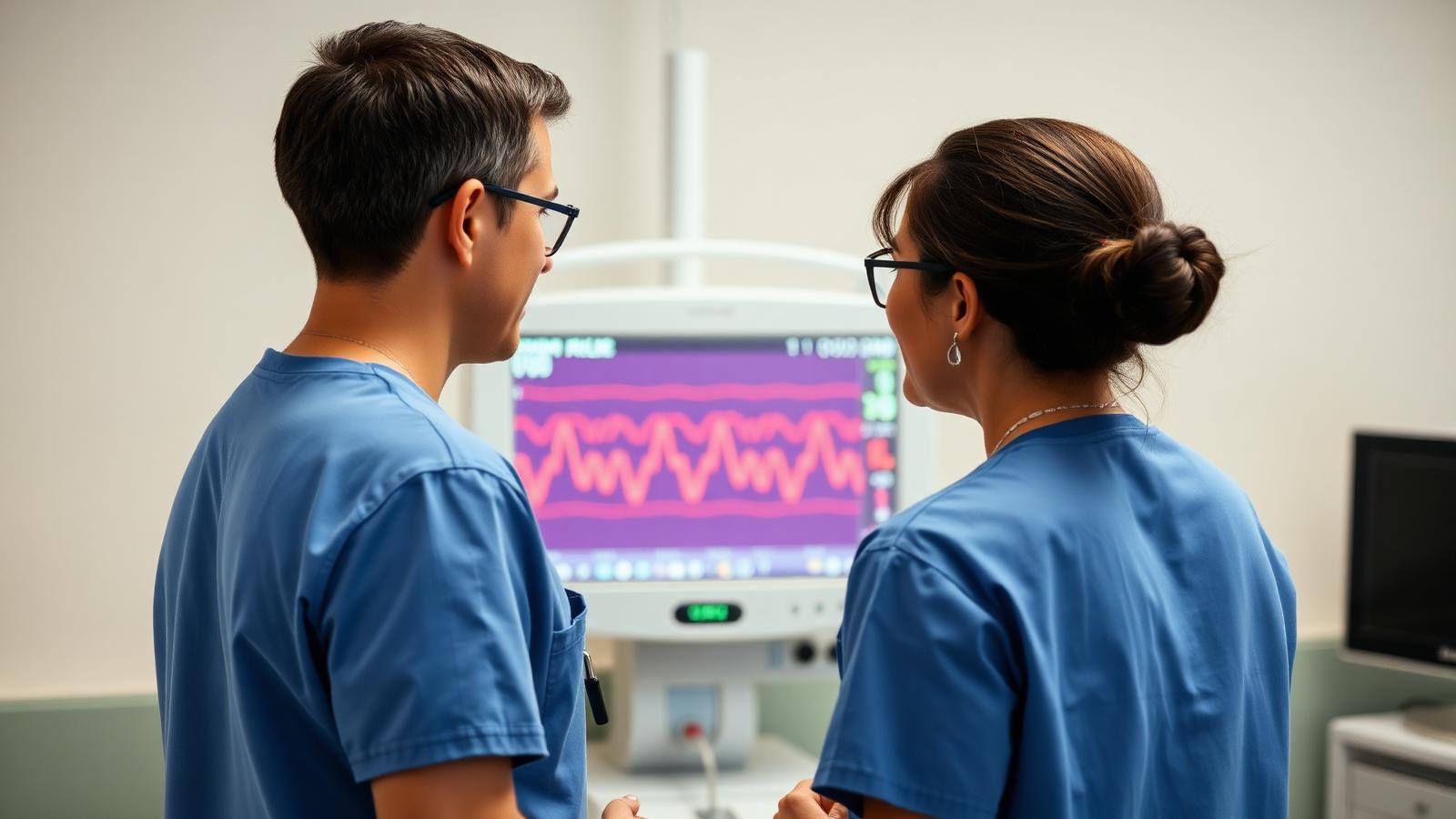
Imagine two nursing-school graduates.
The first was an excellent student. They memorize information quickly, know the symptoms of diseases, remember medication names, and answer questions confidently.
The second graduate also has the necessary knowledge—but there is more.
They notice when a patient’s condition changes. They understand which information matters right now. They can decide what should happen first. They do not pretend to know an answer when they are uncertain, and they recognize when a situation requires help from another professional.
Now imagine that the patient is someone you love. Which graduate would you trust?
Of course, the comparison is artificial. A good nurse needs both knowledge and decision-making ability. But there is a meaningful difference between “I know the correct answer” and “I understand what to do with this information.”
Somewhere between those two points, a student begins to become a professional.
Real Life Will Not Offer Four Answer Choices
Education often has a clear structure. There is a question, several options, and one answer to select. Afterward, you can view the correct response and an explanation.
A patient is different.
No one highlights the key symptom in bold. No one tells you which part of the medical history matters most at this moment. Four buttons labeled A, B, C, and D do not appear.
There is a person—their concerns, vital signs, history, orders, medications, and changing condition. Several things may happen at once.
Professional thinking therefore does not begin with recalling the largest possible amount of information. It begins with a question:
Of everything I can see right now, what actually matters?
Knowing What to Do Is Not Enough; You Need to Know What Comes First
Imagine a patient who might benefit from several actions. Each action may be reasonable, but you cannot perform all of them simultaneously.
What happens first? What can wait? Which issue creates the greatest risk? What requires an immediate response?
This is where knowledge becomes a decision.
You can know ten appropriate interventions and still make an unsafe choice if you choose the wrong priority. An essential nursing skill is not only knowing what could be done, but determining what needs to be done now.
That is one reason some NCLEX questions can feel frustrating. You may look at the options and think, “But several of these are correct.”
Perhaps they are. The task may not be to find the only reasonable action. It may be to identify the safest or highest-priority action in this specific situation.
A Good Nurse Does Not Need to Know Absolutely Everything
That may sound strange after years of education and exam preparation that continually test your knowledge. Healthcare is too broad for one person to know everything.
Professional competence is not only the amount of information you can store in memory. It also includes understanding the limits of your knowledge.
Sometimes the right decision begins with:
- “I am not certain.”
- “I need to verify this.”
- “I need help.”
- “I need to report this change.”
Those statements are not signs of weakness. Unfounded confidence can be far more dangerous.
A patient does not need someone who always has an immediate answer. A patient needs someone who knows what to do when the answer is not yet clear.
Noticing Change Can Matter More Than Recalling a Definition
You may know exactly how a condition is described in a textbook, but a real patient does not have to match the ideal description.
It is not enough to recognize a list of signs. You also need to notice what has changed:
- The patient is behaving differently.
- A value has shifted from the previous measurement.
- A new symptom has appeared.
- Something in the overall pattern no longer looks right.
One isolated value may not tell you much. A change in that value, together with other findings, may alter the entire picture.
Clinical thinking requires more than looking at pieces of information. It requires seeing the relationships among them.
A Good Decision Begins With the Right Question
Students naturally learn to ask, “What is the correct answer?” Much of education is organized around tests.
A professional question sounds different:
Why is this the safest and most justified decision right now?
The difference may seem small, but it changes the thinking process.
Instead of searching immediately for the correct option, ask:
- What is happening?
- What creates risk?
- Which information matters?
- What information is missing?
- What could happen if no action is taken?
- Should I act independently or involve someone else?
Only then does the decision emerge.
- 1Recognize cues
- 2Analyze cues
- 3Prioritize hypotheses
- 4Generate solutions
- 5Take action
- 6Evaluate outcomes
Knowing When to Pause Is Also a Professional Skill
A competent professional is often imagined as someone who acts quickly and confidently. Speed does not always equal quality.
Sometimes the most professional action is to stop, verify, clarify, or ask a question rather than make a high-stakes assumption. In clinical work, “I need to make sure” can be more valuable than trying to appear certain at any cost.
The goal is not to look like the person who knows everything. The goal is patient safety.
| Recall-focused thinking | Clinical-judgment thinking |
|---|---|
| “Which answer is correct?” | “Which action is safest and most appropriate now?” |
| “Do I remember the definition?” | “What changed, and why does it matter?” |
| “Several options sound reasonable.” | “Which option addresses the greatest current risk?” |
| “I should sound certain.” | “Do I need to verify, ask for help, or escalate?” |
| “I got the practice question wrong.” | “Where did my reasoning change direction, and what can I learn from it?” |
A Mistake in Practice Feels Different From a Mistake Beside a Patient
Making a mistake in a study app is easy: choose the wrong response, read the explanation, understand it, and continue.
That is precisely why the learning stage is one of the best places to make mistakes. A wrong decision can become information:
- Why did I think that?
- Which detail did I miss?
- Where did my reasoning go in the wrong direction?
- What made the distractor feel convincing?
The goal is not to criticize yourself. It is to understand your decision-making process.
It is better to encounter a reasoning error in practice, examine it, and change your approach than to meet the same pattern for the first time beside a real patient.
This Is Why the NCLEX Tests More Than Memory
The NCLEX is not organized only around “Do you remember this fact?” Clinical judgment—the ability to analyze patient information and use knowledge to make safe decisions—is central to the exam.
The six cognitive skills used in this article follow the NCSBN Clinical Judgment Measurement Model described in the current NCLEX Test Plans: https://www.nclex.com/test-plans
You may need to recognize important data, understand what they mean, determine a priority, choose an action, and evaluate an outcome.
Knowing a topic may not be enough. You must be able to use that knowledge in context. That is closer to professional practice than simply reproducing information.
The six NCJMM clinical judgment skills provide a structured language for reviewing that process.
Showing the Correct Answer Is Not Enough
ExamReady should help people prepare for the NCLEX. But if a learner chooses the wrong response and the app only says, “The correct answer is C,” something important is missing.
More useful questions are:
- Why is C correct?
- Which information in the scenario was decisive?
- Why does another option sound reasonable but fail to address the current priority?
- Which risk needed to be recognized?
- How would the answer change if the situation changed?
Memorizing the answer to one question is not the biggest win. Understanding the reasoning well enough to apply it to a situation you have never seen is far more valuable.
You can also see how the reasoning appears across current NCLEX question types.
One Day, A, B, C, and D Will Disappear
During NCLEX preparation, it is easy to focus on questions, scores, and correct or incorrect responses. The NCLEX is not the final destination. A profession begins after it.
One day, a real person will replace the scenario on the screen. There will be no “Show explanation” button and no answer key.
A strong preparation outcome is therefore not only the ability to choose the correct option more often. It is the ability to pause and understand:
- What is happening?
- What matters most right now?
- Which decision is safest for the patient?
- Why am I making that decision?
Knowledge is essential for a good nurse. But patients entrust you with more than what you know. They entrust you with what you do with that knowledge.
This article is educational and explains how clinical judgment connects learning with safer decision-making. It does not replace local policy, professional supervision or patient-specific clinical judgment.
What to read next
 Clinical Judgment
NCLEX Clinical Judgment Model: Six NCJMM Skills Explained
Learn the six NCJMM clinical judgment functions—from recognizing cues to evaluating outcomes—and use them to review NCLEX case-study reasoning.
6 min read Nursing Life
What It Means to Be a Nurse
Most of a nurse's work happens in conversations — with patients, families, doctors, and colleagues. Here is why being understood, listening, and speaking up are part of safe patient care.
3 min read Study Guides
Six Terrible Ways to Prepare for the NCLEX (Please Do Not Do This)
Why sleep deprivation, marathon study sessions, passive rereading, avoiding weak topics, neglecting health, and isolation can undermine NCLEX prep.
4 min read