NCLEX Clinical Judgment Model: Six NCJMM Skills Explained
Learn the six NCJMM clinical judgment functions—from recognizing cues to evaluating outcomes—and use them to review NCLEX case-study reasoning.
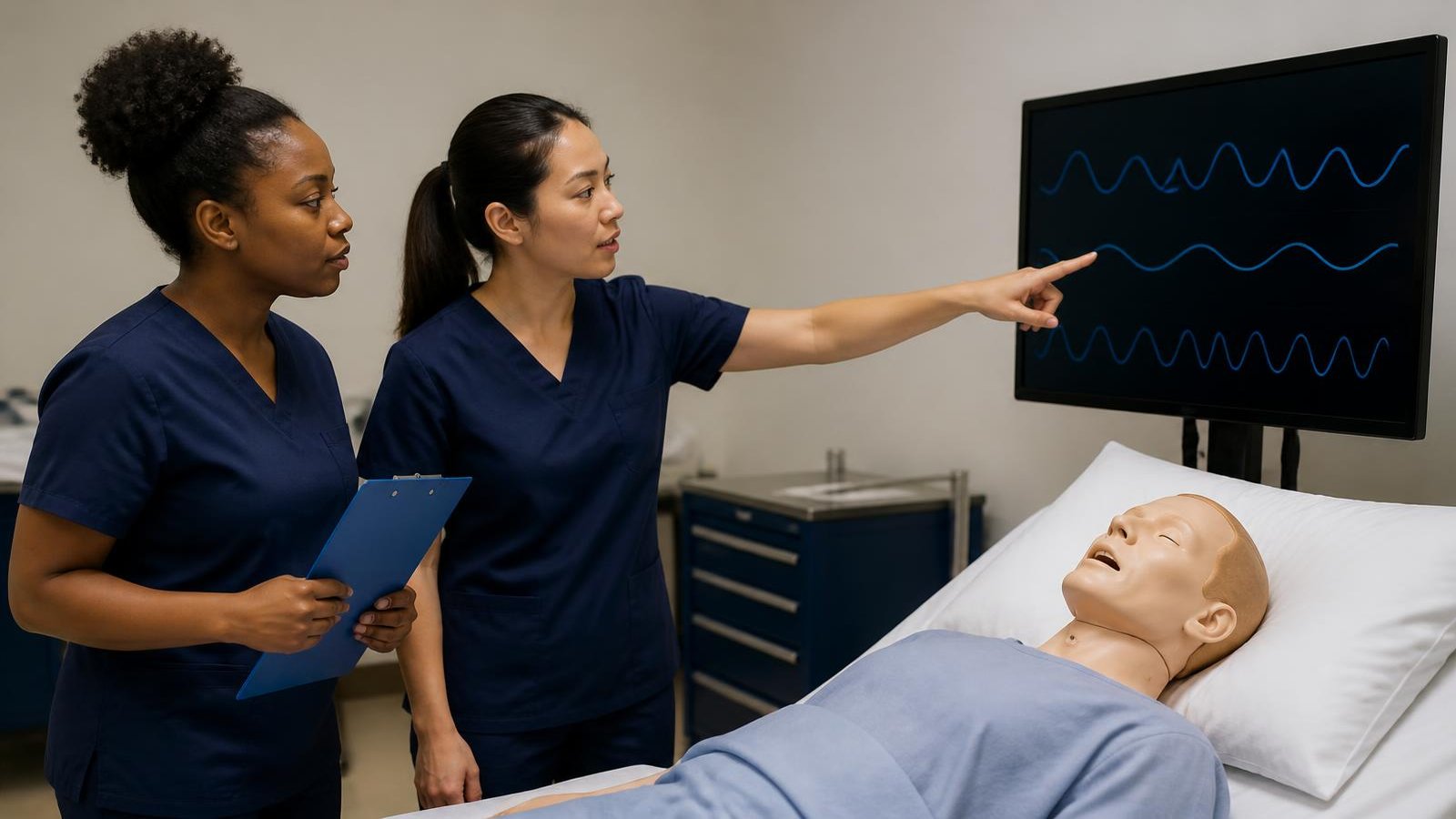
Clinical judgment is the process of noticing relevant information, interpreting what it may mean, deciding what matters most, choosing a response, and checking the result. The NCLEX measures this process across stand-alone items and unfolding case studies.
The NCSBN Clinical Judgment Measurement Model, commonly called the NCJMM, organizes clinical judgment into six cognitive functions:
- Recognize cues
- Analyze cues
- Prioritize hypotheses
- Generate solutions
- Take action
- Evaluate outcomes
These functions are connected, not isolated boxes. New information can change your interpretation and require you to revisit an earlier assumption.
Where the NCJMM fits into the NCLEX
Next Generation NCLEX case studies are designed to measure clinical judgment across a changing client scenario. You may see records, assessment findings, orders, laboratory data, or other information added over time. The task is not only to remember a fact; it is to decide which facts matter and how they affect the next decision.
The NCJMM also helps explain reasoning in stand-alone items. Even when an item measures only part of the model, the same questions remain useful: What are the cues? What might they mean? What response is supported? What outcome would show whether it worked?
1. Recognize cues
Recognizing cues means identifying information that may be relevant to the client's current situation. A cue can come from a history, assessment, laboratory result, medication record, statement, or change over time.
Useful questions include:
- What is new or different from baseline?
- Which findings are expected, and which require more attention?
- Are several cues pointing toward the same concern?
- Is important information missing?
The common error is collecting every detail without deciding which ones relate to the task. Practice marking only the cues that could change your interpretation or action.
2. Analyze cues
Analyzing cues means connecting the relevant findings and considering what they may indicate together. One datum rarely tells the whole story.
Ask:
- How do these findings relate?
- Which explanation is consistent with the complete pattern?
- Does one cue make another more or less concerning?
- Could the finding have a different explanation?
Analysis should remain tied to the evidence in the item. Avoid filling gaps with facts the scenario did not provide.
3. Prioritize hypotheses
A hypothesis is a possible explanation for the client's needs or risks. Prioritizing hypotheses means deciding which explanation deserves attention first based on urgency, likelihood, risk, and available evidence.
Priority frameworks can help, but none should replace the scenario. Airway-breathing-circulation, safety, acute versus chronic, and unstable versus stable are useful lenses only when they fit the cues.
A stronger question than “Which rule should I use?” is: Which possible problem creates the most immediate or significant risk given the evidence available now?
4. Generate solutions
Generating solutions means identifying responses that could address the priority need. At this stage, consider the goal of the response before choosing a specific option.
Depending on the task, an appropriate solution may involve gathering essential information, preventing harm, communicating a change, providing education, or carrying out an indicated intervention within the role described.
Compare possible solutions for relevance, safety, feasibility, and expected benefit. An action can be generally reasonable but still be wrong for the immediate task.
5. Take action
Taking action means selecting and implementing the response that best fits the priority and evidence. On the NCLEX, the item may ask what the nurse should do first, which action is most appropriate, or which interventions should be selected.
Before choosing, check:
- Does the option address the priority hypothesis?
- Is it safe in the situation described?
- Is it within the role and setting in the item?
- Does it require an unsupported assumption?
- Is another option more immediate or more directly relevant?
“Assess before acting” is not an absolute rule. Sometimes the item already provides the assessment needed for an urgent response. Let the scenario determine whether more information or action comes next.
6. Evaluate outcomes
Evaluating outcomes means comparing new information with the intended goal. Ask whether the response improved the situation, produced no meaningful change, or revealed a new concern.
Evaluation is more than looking for a normal number. It may involve a trend, a change in symptoms, a client's understanding, a safety result, or the need to revise the plan.
Useful questions include:
- What outcome was expected?
- Which new cue best shows progress or deterioration?
- Does the original hypothesis still fit?
- Should the response continue, change, or escalate according to the scenario?
The six functions in one view
| NCJMM function | Main question | Common reasoning error |
|---|---|---|
| Recognize cues | What information is relevant now? | Treating every detail as equally important |
| Analyze cues | What pattern do the cues create? | Interpreting one finding in isolation |
| Prioritize hypotheses | Which explanation matters most first? | Applying a priority rule without context |
| Generate solutions | What responses could address the priority? | Choosing the first familiar intervention |
| Take action | Which response is best supported now? | Adding assumptions not present in the item |
| Evaluate outcomes | Did the response achieve the intended result? | Looking at a single value instead of the trend and goal |
How to practice the NCJMM with question review
You do not need a complex worksheet. After a practice case, write one short answer for each function:
- Cues: Which two or three findings mattered most?
- Analysis: What relationship did you see between them?
- Priority: Which concern came first, and why?
- Solutions: What response goal did you identify?
- Action: Why was the selected option better supported than the alternatives?
- Outcome: What change would confirm improvement or require a new decision?
If you missed the item, identify the first function where your reasoning diverged from the explanation. That is more actionable than writing only “content gap.”
For a broader explanation of why the NCLEX emphasizes this skill, read Clinical Judgment: Knowledge vs. Decisions. You can also connect this model with NCLEX question types and a test-taking strategy.
What the model does not mean
The NCJMM is not a set of magic words that reveals the answer. It does not mean every item will visibly ask about all six functions, and it does not turn priority frameworks into universal formulas.
Its value is that it gives you a consistent language for examining how you reached a decision. When you can identify whether the problem occurred at cue recognition, interpretation, priority, action, or evaluation, your review becomes more specific.
Official sources
- NCSBN 2026 NCLEX-RN Test Plan
- NCLEX Test Plans
- NCSBN: The Next Generation NCLEX — Clinical Judgment Measurement Model
Educational note: This article explains an exam framework for study purposes. It does not provide patient-specific clinical advice and does not replace current nursing standards, institutional policy, or professional judgment.
What to read next
 Clinical Judgment
Who Would You Trust With a Patient: Someone Who Knows Every Answer—or Someone Who Can Make Decisions?
Why nursing requires more than recall—and how priorities, uncertainty, changing patient data, and clinical judgment connect NCLEX preparation to practice.
7 min read Nursing Life
What It Means to Be a Nurse
Most of a nurse's work happens in conversations — with patients, families, doctors, and colleagues. Here is why being understood, listening, and speaking up are part of safe patient care.
3 min read Study Guides
Six Terrible Ways to Prepare for the NCLEX (Please Do Not Do This)
Why sleep deprivation, marathon study sessions, passive rereading, avoiding weak topics, neglecting health, and isolation can undermine NCLEX prep.
4 min read